
Drive through any Kenyan city and play a game.
Count the buildings that look genuinely different from one another. Not different in colour or in the number of floors — different in the way they relate to the land they sit on, the climate around them, the people who use them.
You will not get very far before the pattern becomes obvious. Same block layouts. Same flat facades. Same finishes applied to the same forms, rearranged slightly from plot to plot. A building designed in Westlands looks like a building designed in Nyali looks like a building designed in Nakuru. The location changes. The architecture does not.
This is Kenya’s copycat building culture, and it is not an accident.
Why Buildings Look the Same
It starts with clients, which is an uncomfortable thing to say but it is true.
Most clients come to a first meeting with a reference image. A building they drove past. A house they saw on Pinterest. A facade they liked on Instagram. They want something that looks like that — safe, proven, already validated by the fact that someone built it.
I understand this completely. Building is one of the largest financial commitments most people make in their lives. When the stakes are that high, safe feels rational. Why risk something different when you can see with your own eyes that the reference works?
The problem is that the reference usually doesn’t work — not here, not in this climate, not on this specific plot of land.
The building they saw in Westlands was designed for Westlands. Its proportions, its orientation, its material choices — all of them were made for a specific context. Lift that building and drop it in Diani and it fights the coastal climate instead of working with it. Drop it in a Nairobi suburb with different topography and the drainage logic no longer holds. The copy looks similar. The performance is not.
Beyond the practical failures, there is a deeper problem. When every building looks like every other building, the built environment of an entire country loses something. It loses the evidence of thoughtful response to place. It loses the visual record of what this land, this climate, and these communities actually produce when an architect pays attention.
We are building a visual sameness into Kenya that will take generations to undo.
Less Is More Is Not Less Work
My design philosophy starts with three things: respect for nature, simplicity, and natural materials.
When I say simplicity, I do not mean minimal effort. I mean the opposite.
Simplicity in architecture is the hardest outcome to achieve. It requires more decisions, not fewer — because every element that remains in a simple building has to earn its place. There is nowhere to hide. In a complex, ornamented building, a poorly considered detail disappears into the visual noise around it. In a simple building, every line, every material, every proportion is fully exposed.
Tadao Ando — whose work I have followed for years — builds with concrete, water, and light. Three elements. The discipline required to make those three elements sufficient is extraordinary. His buildings feel effortless because the work that went into them was enormous. The simplicity is not the starting point. It is the result.
Frank Lloyd Wright understood the same thing from a different angle. His organic architecture did not simplify by removing — it simplified by integrating. A building that sits genuinely within its landscape, that uses materials drawn from its surroundings, that responds to the way light moves across the site through the day — this is not easy to achieve. It looks inevitable once it is done. The appearance of inevitability is what years of careful thinking produces.
Less is more is a principle about discipline, not shortcuts. It demands that every decision be deliberate. It demands that you know what to take out as much as what to put in. Most buildings in Kenya are not simple — they are unresolved. There is a difference.
Showing Clients What Is Possible
My job, a significant part of it, is showing clients that simple can be sophisticated.
The conversation usually starts with the reference image. I take it seriously — it is telling me something real about what they want to feel, not just what they want to see. Then I ask better questions.
How do you actually live in this space? Where do you spend most of your time at home? How does the morning light work in your current house — what do you love about it and what frustrates you? What does it feel like to walk into a room that makes you feel calm?
These questions redirect the conversation from aesthetics to experience. And once a client is thinking about experience — how the space will actually feel to inhabit — the reference image starts to matter less. What they really want is the feeling behind it. That feeling is achievable through design without copying the form.
I once worked with a client who arrived with a very specific reference — a house they had seen somewhere in Nairobi, heavy ornamentation, busy facade, the kind of building that announces itself loudly. I asked them what they liked about it. They said it felt substantial. It felt like it had been built by someone with conviction.
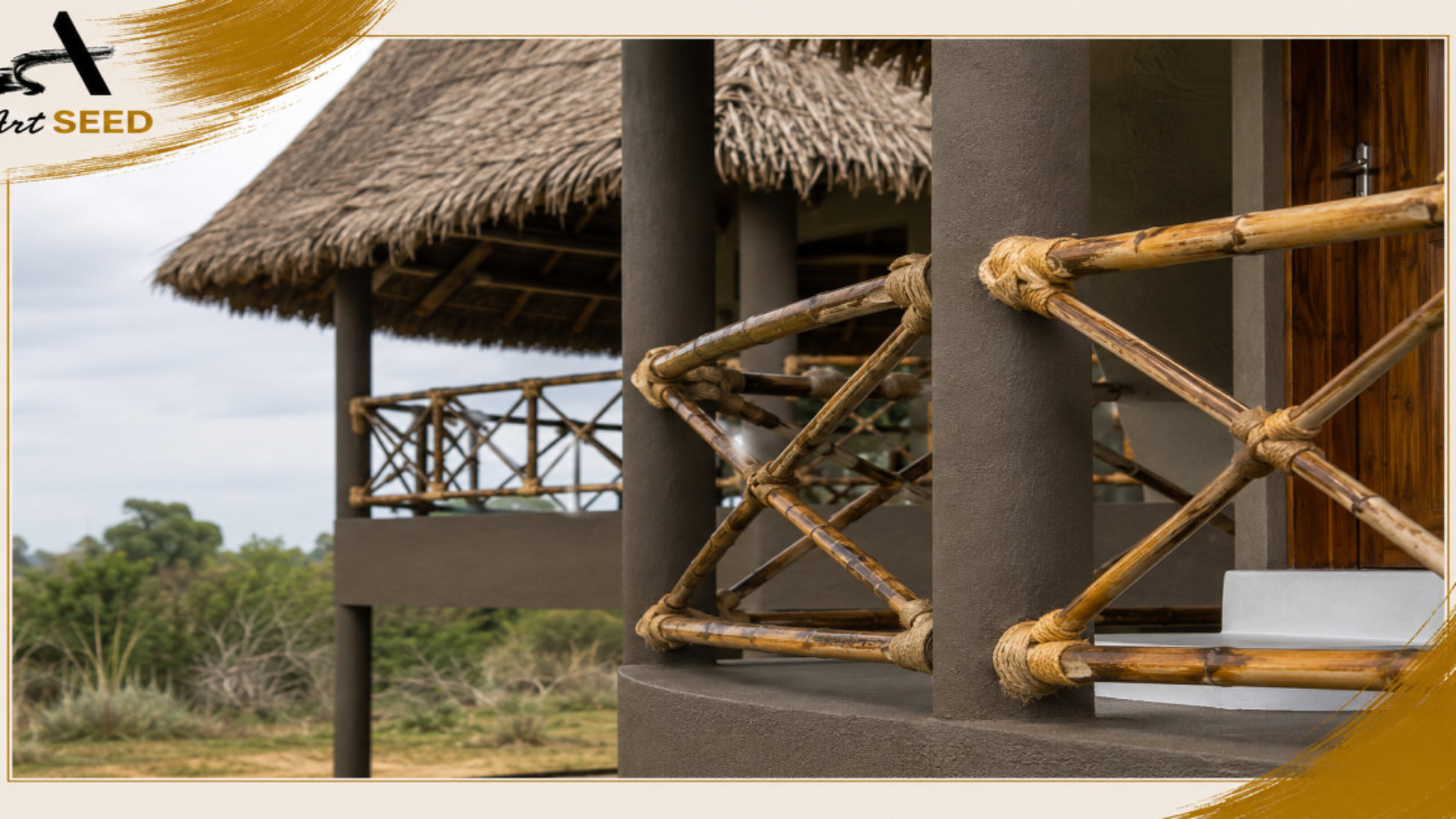
We built something completely different. Simple form. Natural stone. Deep overhangs. A building that responds to its surroundings rather than competing with them.
When it was finished they told me it was more than they had imagined. Not louder than the reference. More present. More itself.
That is what timeless design produces. Buildings that are fully what they are — not what they were copied from.
The Standard
I admire architects who commit to this kind of discipline. Kéré builds with earth bricks and natural ventilation in the Sahel. Mariam Issoufou revives compressed clay construction in Niger because it performs better in the climate than concrete, not just because it is traditional. Ando uses concrete so precisely that it becomes something else entirely.
The common thread is that each of them knows what they believe and builds it consistently. The work is recognisable not because it repeats itself but because it has a clear point of view.
This is the standard I am working toward at Art Seed. Simple, timeless architecture that responds to its environment, uses natural materials, and is designed for the life being lived inside it — not for the reference image someone brought to the first meeting.
Kenya’s buildings do not have to look the same. That is a choice being made, project by project, by architects who take the safe path and clients who ask for it.
Both can choose differently.
What does timeless design mean to you? I’d like to know — drop it in the comments.