
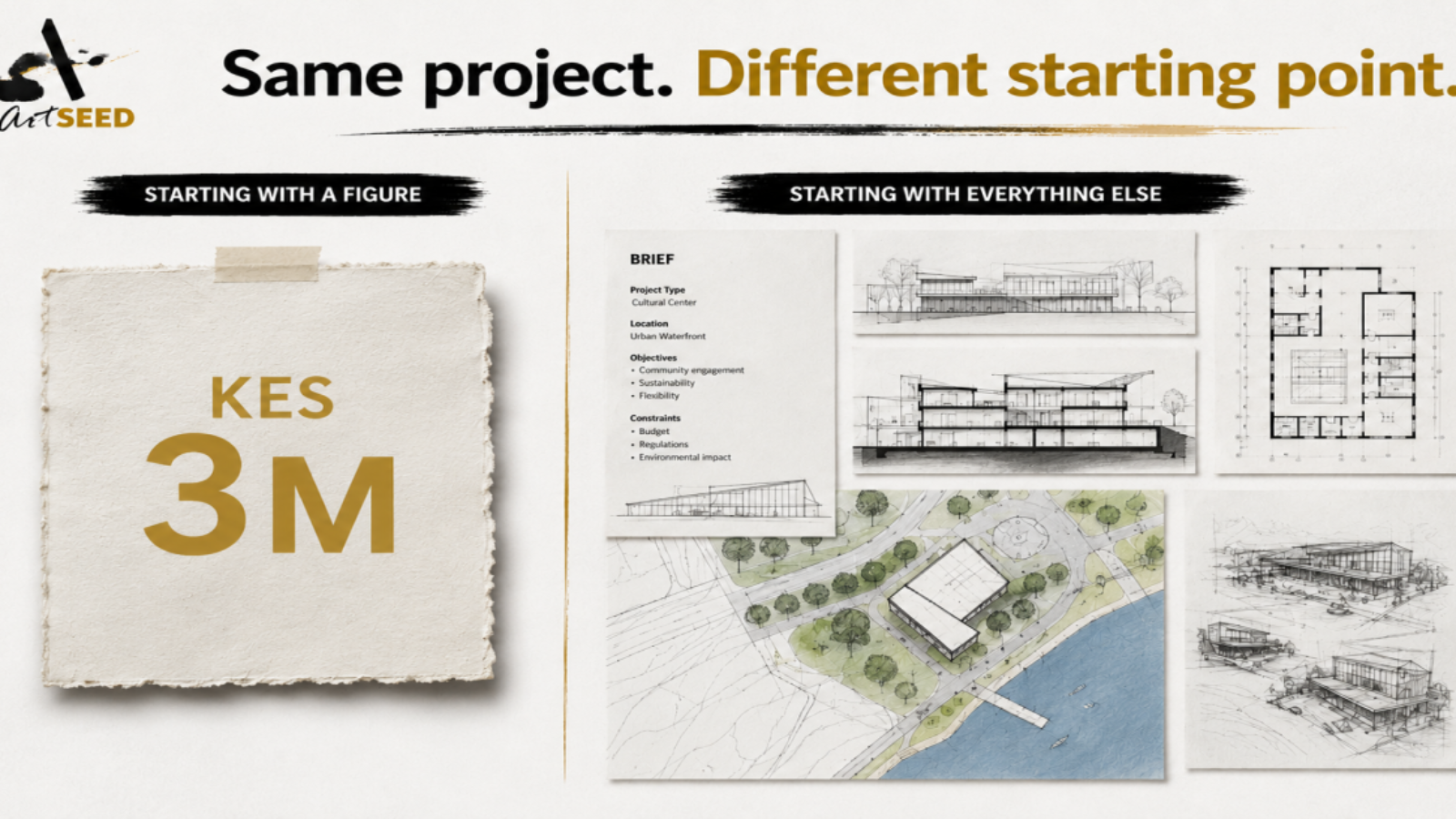
“Just give me a quote.”
I hear this more than almost anything else. A client calls, they have a piece of land, they have an idea of what they want to build, and they want a number. Not a conversation. Not a site visit. A number they can take away and decide with.
I understand the instinct. A quote feels like information. It feels like you are making progress — you have a figure, you can compare it to your budget, you can move forward or not. It feels efficient.
It is not efficient. It is the beginning of a more expensive project than the one you were planning.
What a Quote Without Consultation Actually Is
A quote without proper consultation is a guess dressed up as a number.
To price a project accurately, you need to know what you are actually building. That sounds obvious. It is not, because most clients who ask for a quote do not yet know what they are building — not in the level of detail that a real number requires.
What is the soil condition on the site? A site with poor soil may need deeper foundations or ground improvement work that adds significant cost before a single wall goes up. A quote that does not account for this is not a quote. It is an optimistic estimate that will be revised the moment excavation starts.
What are the actual dimensions of the building, room by room? Clients often have an idea — “four bedrooms, two bathrooms, open plan kitchen” — but the difference between a 200 square metre version of that and a 280 square metre version is not a small rounding error. It is hundreds of thousands of shillings.
What materials are being specified? A client who says “I want tiles” has not given me enough information to price tiles. The range between basic ceramic and imported porcelain is enormous, and a quote that uses one while the client is imagining the other will produce a very uncomfortable conversation later.
What is the site access like? Is there a road? Can a concrete mixer reach the building footprint? Are there utilities on site or does everything need to be brought in? These are not minor variables. They are line items.
A quote that does not address these questions is a number that will change. Guaranteed. The only question is how much it will change, and whether you find out before or after you have committed to the project.
The Client Who Skipped
I had a client who came to me after they had already started. They had gotten a quote from a contractor, liked the number, and broken ground. Three months in, they were stuck.
The contractor had quoted on assumptions — standard soil, standard access, standard material specifications — that did not match the reality of the site. When excavation revealed poor ground conditions, the foundation design had to change. The cost of that change was not in the original quote because the original quote had never included a proper site assessment.
Then the materials. The client had assumed mid-range finishes throughout. The contractor had quoted on the cheapest available specification. When the client saw the actual tiles and fittings that the quote covered, they wanted upgrades. Every upgrade added cost that compounded through the project.
By the time they came to me to help them get the project back on track, they had spent approximately thirty percent more than their original quote — not because anyone had been dishonest with them, but because the original quote had never been a real number. It had been what the project cost under the best possible conditions with the cheapest possible materials.
Neither of those things was true of their project.
What Consultation Actually Does
A proper consultation before a project begins does several things simultaneously.
It establishes what you are actually building. Not a general idea — a real brief. Room sizes, adjacencies, how you move through the space, what the building needs to do for the people who use it. That brief is what a real quote is built on.
It assesses the site. Soil conditions, orientation, access, services, any constraints that affect the design or the build. A site visit before design begins costs very little relative to what it prevents. I have been on sites where the proposed building location was directly above a services corridor, or where the orientation the client had assumed would work put the main living space facing west in a coastal climate — full afternoon sun, no cross ventilation. These are not small issues. They change the design.
It surfaces the real budget. Most clients come with a number in mind. Consultation is where that number gets tested against the reality of what they want to build. Sometimes it holds. Sometimes the brief needs to adjust to match the budget. Sometimes the budget needs to grow to match the brief. Either way, that conversation is better before a foundation is poured than after.
It identifies risk early. Poor soil. Access problems. Material lead times for specified items. Regulatory issues with the land or the proposed use. All of these are manageable when they are discovered during consultation. None of them are manageable when they are discovered mid-construction.
The Actual Cost of “Just Give Me a Quote”
The thirty percent overrun I described above is not an outlier. It is a pattern.
Projects that begin without proper consultation tend to cost more, take longer, and produce more conflict between the client and the contractor than projects that begin with a real brief and a real site assessment. The money saved by skipping consultation is recovered many times over in the variations, the revisions, the unexpected costs, and the time lost to decisions that should have been made before work started.
I am not saying this to sell consultations. I am saying it because I have watched clients absorb costs that were entirely avoidable, on projects that could have gone smoothly, because the beginning of the project felt too early to spend money on planning.
The beginning of the project is exactly when you spend money on planning. That is what the beginning is for.
What the Conversation Should Look Like
When a client calls and asks for a quote, my first question is always the same: can we start with a site visit and a proper brief?
Some clients say yes immediately. They understand that a number without context is not useful. Some push back — they want the number first, they will do the site visit if the number works. I explain, as plainly as I can, that the number I give them without a site visit is not the number the project will cost. It is a range, a rough estimate, something to orient them but not something to build a budget around.
The clients who get this tend to be the ones who have built before, or who have watched someone else build and seen what happens when the planning is skipped. The clients who push back hardest on consultation are often the ones who need it most.
Book a consultation before you break ground. Not because it is a formality. Because it is the cheapest part of your project and the one that determines what everything else costs.