
Kenya needs 250,000 new housing units a year. We build about 50,000. That gap has been growing for years and nobody is closing it anytime soon — not at the rate things are going.
I bring this up because most people respond to that housing pressure the wrong way. They assume the only real move is to build new — buy land, start from zero, go through the whole process again. For most Kenyans, that is not realistic anymore. Land prices alone have priced a huge number of people out of starting fresh. Add construction material costs, which have not gone down in years, and a permit and approval process that can stretch a project out by months before you even break ground, and “just build new” stops being practical advice. It becomes something only a small group of people can actually do.
But here is what I think gets missed in all of this. You don’t always need to build new. Sometimes the smartest investment is in what you already have.
What Remodelling Actually Covers
People hear “remodelling” and think paint and tiles. That is finish replacement, and it is the smallest part of the job — usually the last two weeks of a project that takes months.
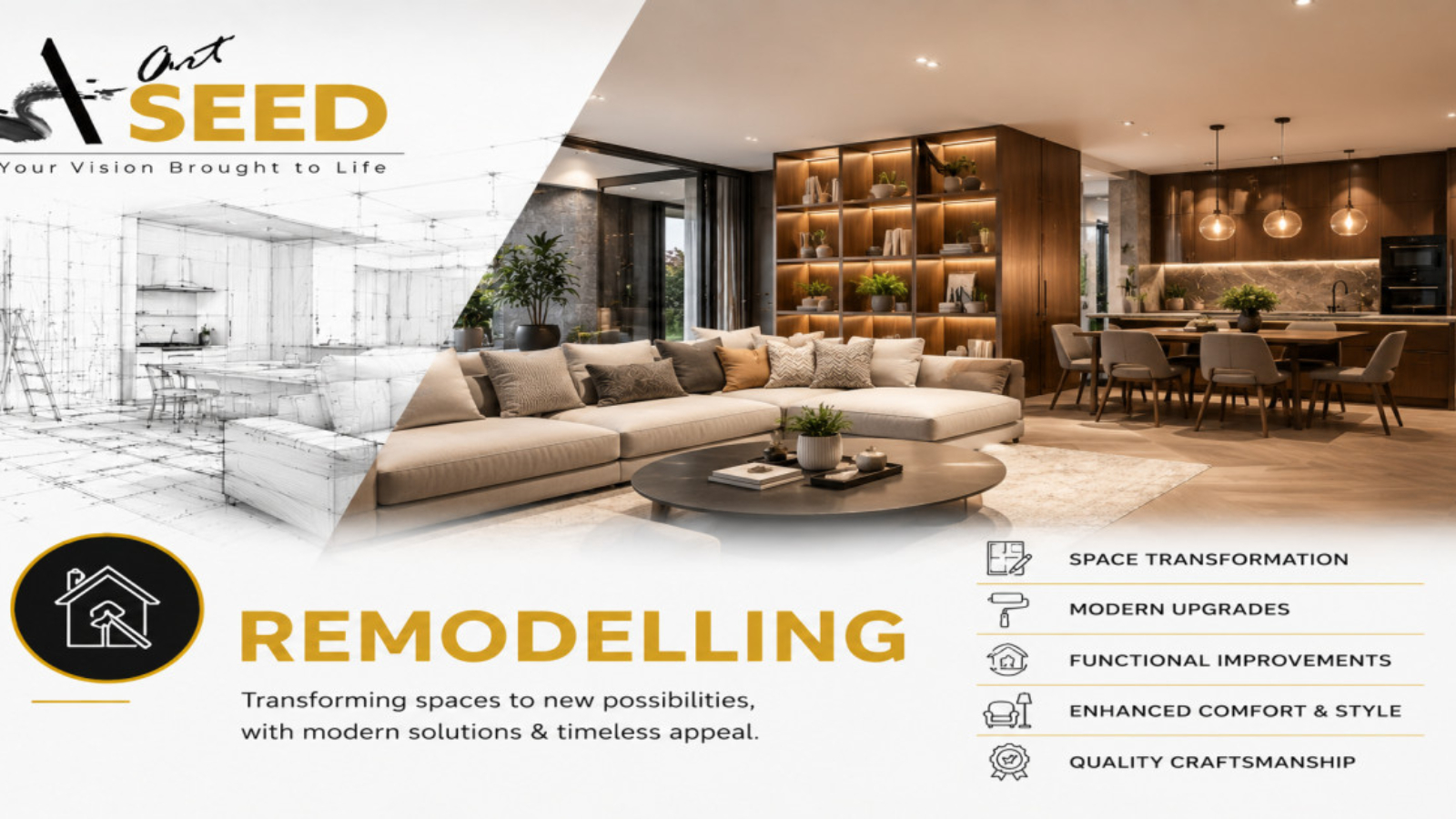
Real remodelling covers spatial reconfiguration first. Most older homes were designed around a different way of living. Closed kitchens because that was the norm twenty years ago. Bedrooms sized for families that have since changed shape. Living spaces that don’t connect to outdoor areas at all, even on properties where outdoor space is the whole point of being there. Reconfiguring that layout — knocking down a wall here, opening up a sightline there — often does more for how a property feels than anything you could do with finishes.
Then there are structural upgrades, which matter more than most owners realise, especially on the coast. Salt air works on reinforcement bars slowly and invisibly. A building can look fine on the outside while the steel inside concrete columns has been corroding for fifteen years. Nobody checks until something cracks or a contractor pulls back plaster during another job and finds rust stains running down the wall. Remodelling is the moment to actually assess that, not just paper over it.
Extensions come next, when the land allows it and the existing foundation can take the additional load — which it is not always able to do, and that is worth checking before anyone gets attached to a design. And then finishes. Tiles, paint, fittings, the things people photograph. Important, but last.
A well-run remodel touches the bones of the building. The finishes are what you see. The structure and the layout are what actually determine whether the project was worth doing.
Why This Matters More on the Coast
I see this constantly in Malindi and along the coast generally. Tourism demand here keeps rising, and Airbnb-style listings in coastal towns have grown fast over the last few years. The properties that perform — the ones that actually get booked and get repeat guests — are not always the newest builds. They are the well-remodelled ones. Updated layouts that match how guests actually move through a space. Proper ventilation, because air conditioning running constantly kills your margins on a short-let property. Finishes that hold up against humidity and salt air instead of failing within two years. Outdoor space designed deliberately, not left over.
A property owner sitting on an older coastal building has an asset most people are underusing. The land is already paid for, often years ago at a fraction of today’s prices. The structure is frequently sound, or close to it, once you assess it properly. What is missing is design thinking — someone looking at the space and seeing what it could be instead of accepting what it currently is.
That is a smaller, faster, cheaper project than building new from scratch. And for short-let income specifically, a good remodel tends to pay for itself faster too, because the improvement shows up directly in occupancy rates and nightly pricing.
Why Most People Skip It Anyway
The usual reason is that remodelling sounds smaller than building new, so people assume it carries less value, less prestige, less of a story. I understand the instinct. New construction feels like a fresh start. Remodelling feels like fixing something old, and fixing old things doesn’t carry the same weight in a conversation as “I’m building.”
But that framing ignores the actual numbers. With Kenya’s housing deficit this wide, and land and material costs only moving in one direction, the cost of starting from zero rises every year. The cost of transforming an existing structure does not rise at the same rate, because you are not paying for land twice, and you are not pouring an entirely new foundation.
I have walked into properties where owners were seriously considering demolition, convinced the building had no value left in it. Most of the time the structure was fine. What was actually wrong was the layout, the finishes, and twenty years of deferred maintenance nobody had budgeted for. None of that requires starting over. It requires someone willing to assess the building honestly instead of recommending the bigger, more expensive project by default.
How We Approach It
At Art Seed, remodelling runs on the same design-build model we use for new construction. We do not hand over a design and disappear. We design the transformation and we execute it — structural assessment, spatial redesign, material selection, and construction, all under one team.
That matters specifically on remodel projects, because structural surprises tend to show up mid-project, after walls come down and you can finally see what you’re actually dealing with. You need the same team that designed the project to be the one solving the problem on site. Not a separate contractor pointing back at the architect, or an architect blaming the contractor for poor execution. One team, one accountability line.
Kenya’s housing gap is not closing through new construction alone — the numbers make that clear enough. There is too much existing building stock sitting underused, and too much demand, especially on the coast, for property that actually works for how people live and travel now.
Thinking about remodelling? Let’s assess what’s possible. DM us.