
A client came to me partway through their coastal build with a suggestion.
They had found taps at a hardware store in Nairobi. Good brand, reasonable price, solid finish. They wanted to buy them directly and save the markup. It made sense to them — they were already managing costs carefully, and buying their own fittings felt like one of the few places they had direct control.
I advised against it. I explained why. They went ahead anyway.
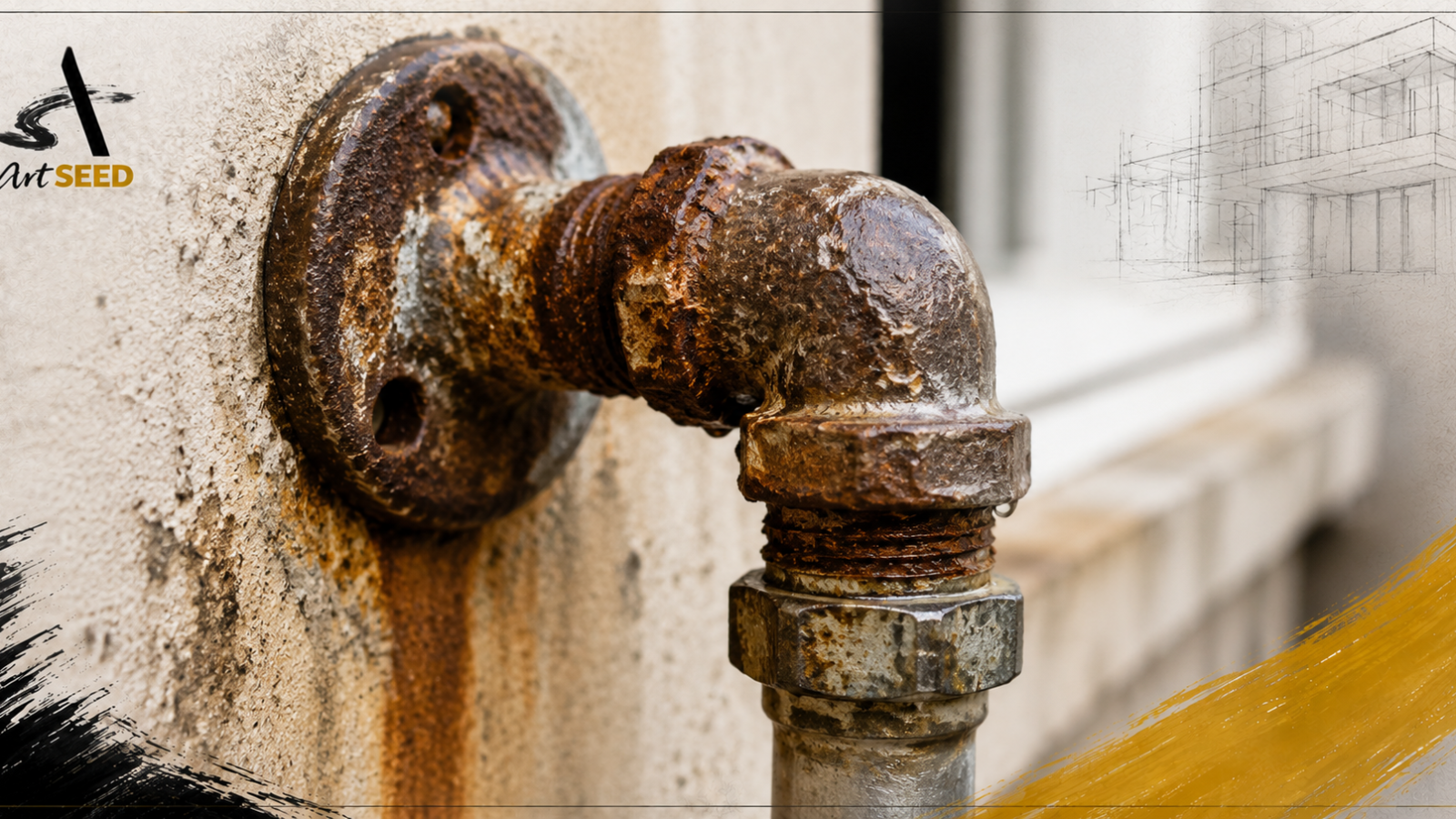
Eight months after moving in, the taps were rusting. The shower fittings had begun to corrode at the joints. The finish on the basin mixer was lifting. The house was less than a year old.
They replaced everything. Then, ten months later, replaced it again — because the second set had the same problem as the first. Same hardware store, different brand, same result.
By the time they called me after the second replacement, they had spent more than three times what the original marine-grade specification would have cost. Plus labour. Plus the damage to surrounding surfaces from rust staining that required repainting.
The saving they were protecting at the start had become the most expensive decision on the project.
Why Location Changes Everything
The problem was not the quality of the taps. Both sets were, by ordinary standards, good products.
The problem was that they were specified for the wrong environment.
Kenya’s coastline — Mombasa, Malindi, Kilifi, Watamu, Diani, Lamu — sits on the edge of the Indian Ocean. Salt air is not a minor inconvenience in this context. It is a constant, aggressive chemical environment. Sodium chloride particles suspended in the moisture-laden air settle on every exposed surface and accelerate a process called galvanic corrosion. What takes years to happen on a metal fitting in Nairobi happens in months at the coast.
Humidity compounds it. Coastal Kenya regularly sits above 80% relative humidity. Surfaces do not dry out between rain and morning dew. The salt particles stay active. The corrosion does not pause.
Standard chrome-plated fittings — the kind you find in most Nairobi hardware stores — are not designed for this. They perform perfectly well in drier, lower-salinity inland environments. At the coast, they fail. Not because they are poor products, but because they are the wrong products.
What Hardware Store Staff Don’t Know
When a client walks into a hardware store in Nairobi and asks for good quality taps, they will be shown what the store carries. Usually chrome-plated brass or stainless steel grade 304. Both are standard specifications. Both are appropriate for Nairobi.
Neither is appropriate for the coast.
The distinction that matters is stainless steel grade. Grade 304 is the most common stainless steel in the market — widely available, reasonably priced, perfectly adequate for most inland applications. Grade 316 adds molybdenum to the alloy composition, which dramatically improves resistance to chloride corrosion. Grade 316 is what marine environments require. Grade 316 is what most hardware stores do not stock, because most of their customers are not building at the coast.
The staff member behind the counter is not misleading you when they call grade 304 “good quality.” It is good quality — for their primary market. The gap is not in their honesty. It is in their frame of reference.
This is the gap that costs clients money.
The same logic applies across every category of finish in a coastal build.
A Practical Comparison
Here is how the specification changes between an inland project and a coastal one, and what the difference costs:
Taps and fixtures: Inland — grade 304 stainless or chrome-plated brass, widely available, standard price. Coastal — grade 316 stainless steel specifically, harder to source, 30–50% more expensive per unit. Expected lifespan inland: 10–15 years with normal maintenance. Expected lifespan at the coast with grade 304: 8–18 months. Expected lifespan at the coast with grade 316: 8–12 years.
Paint: Inland — standard exterior paint, two coats, normal formulation. Coastal — coastal-formulated paint with additional mould inhibitors, higher elasticity for thermal expansion, salt-resistant binders. Costs 20–30% more per litre. Lasts three to four times longer before peeling or chalking.
Wood finishes: Inland — standard varnish or lacquer, widely available. Coastal — marine epoxy or oil-based teak finish. The standard varnish lifts in coastal humidity within one to two years, allowing moisture to enter the timber and begin deterioration from within. Marine finishes hold. The upfront cost is higher. The alternative is replacing timber.
Door and window hardware: Inland — standard chrome hinges and handles, normal specification. Coastal — marine-grade stainless or powder-coated alternatives. Standard chrome hardware shows rust within a year at the coast. After two years it is structurally compromised.
Electrical fittings: Inland — standard switch plates and socket covers. Coastal — stainless steel or high-grade plastic faceplates, sealed junction boxes, additional conduit protection. Salt air enters electrical installations through gaps that seem insignificant in dry conditions. Over time, corrosion in electrical fittings is not just an aesthetic problem.
The pattern across every category is the same: the difference in upfront cost between standard and coastal-specification products is real. The difference in total cost over five years is dramatically larger if you specify incorrectly.
What Your Construction Company Knows
When Art Seed specifies materials for a project, the specification is tied to the project’s location and climate from the beginning.
A coastal project produces a different material schedule than an inland one. Not because we prefer expensive products or because we have supplier relationships we are trying to protect — but because the material schedule determines whether the building performs over its lifetime or requires constant intervention.
We have sourced grade 316 fittings for projects in Malindi and Kilifi. We have specified coastal paint formulations for external and internal applications in high-humidity environments. We have advised clients to change window hardware specified by a previous contractor because it would not survive two wet seasons.
In every case, the client who followed the advice spent less over five years than the client who went to the hardware store alone.
The instruction to consult before you shop is not about control. It is about the fact that the right product for a Nairobi bathroom and the right product for a Mombasa bathroom are not the same product — and the person who knows that is the person who has specified for both.
Before Your Next Hardware Run
If you are building or renovating on Kenya’s coast, here is the practical checklist before you buy any fitting, finish, or hardware:
Ask specifically for marine-grade or coastal-specification products, not just “good quality.” Ask what grade of stainless steel the fitting is. If the answer is not 316, it is probably 304 — fine for Nairobi, not for the coast. Ask for coastal-formulated paint by name — standard exterior paint in a coastal environment is money spent twice. For timber, ask for marine finishes, not standard varnish. For electrical, ask about sealed specifications.
Better still, give your construction team the brief before you shop and let them produce the specification. It costs nothing to ask. It can cost significantly more not to.
Consult before you shop. It is almost always cheaper.